
All the Way
The door isn't locked

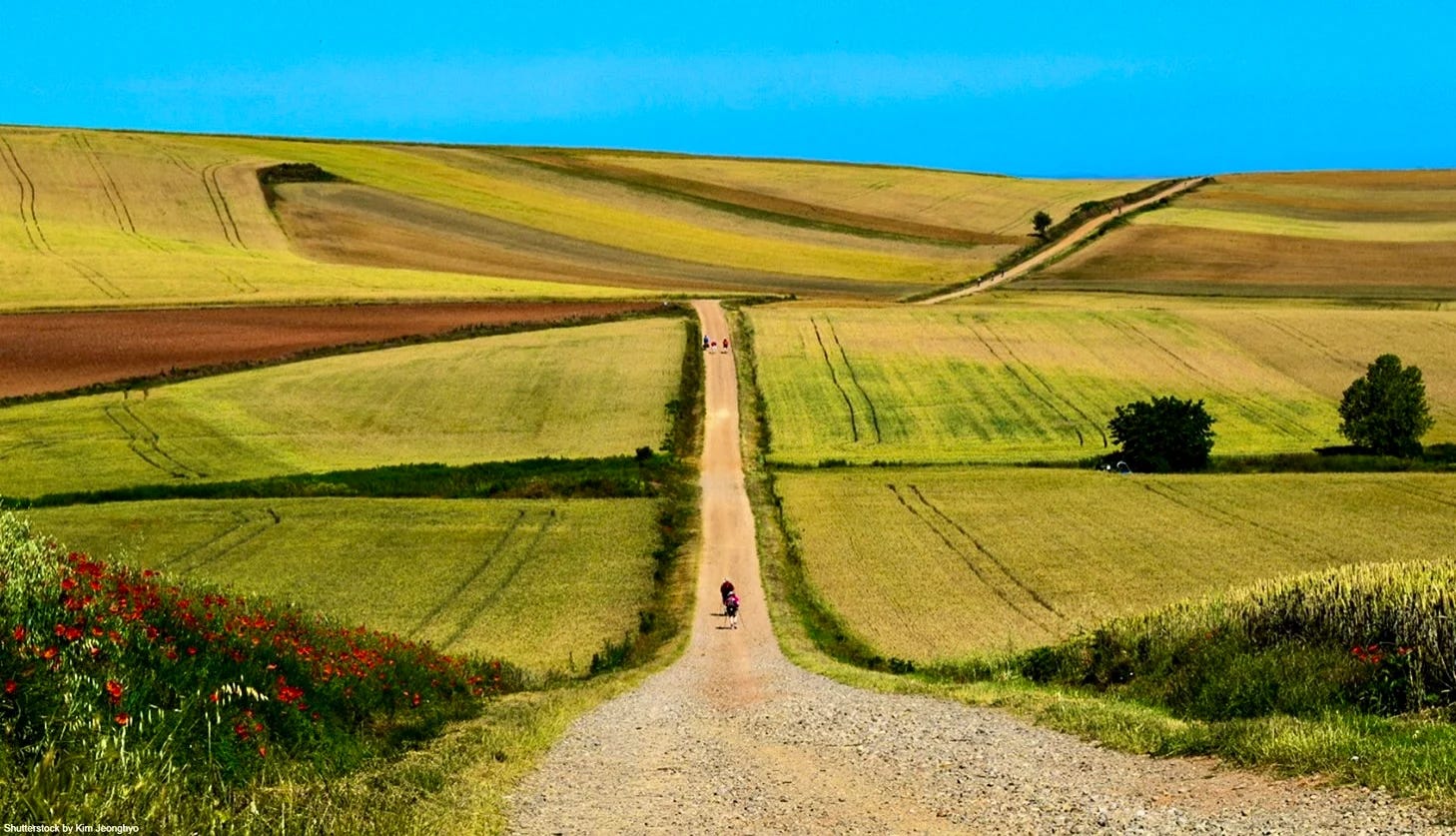
Note to readers: This is the last of several columns about my walks of a 500-mile pilgrimage/trek across northern Spain dating back to the Middle Ages called the Camino de Santiago, or “Way of St. James.” Other pieces are HERE, HERE, HERE and HERE.
At the noon worship show in the Cathedral de Santiago, the highlight for pilgrims is when they swing a big smoky thing around, called a “butafumiera,” which is Latin for “big smoky thing to swing around.” (Yeah, it’s all fun and games till someone’s eye gets knocked out.)
Later I showed a church clerk my “pilgrim passport” with colorful stamps from Waystops spanning my 500-mile walk so that they could give me a certificate stating that I’m forgiven for my sins according to some guy from the 12th century who wore a lampshade for a hat.
The clerk pretended to inspect my pilgrim passport, asked some questions in Spanish that I didn’t understand, got some answers in English that she didn’t understand and then looked up “Glenn Beaton” in a book to get the Latin translation because they write the name in Latin on the certificate because, I guess, St. Peter doesn’t read English or Spanish.
The book had no Latin for “Glenn Beaton.” That made them suspicious. I explained that it’s a Scottish name, which made them more suspicious. Something just wasn’t kosher.
A supervisor was called. Just before an inquisition was commenced, I remembered the Celtic connection to this part of the world. Truthfully, I declared that it’s a Celtic name.
Ta-da! I have the certificate, and it says “Glenn Beaton.” So I got that going for me.
I suppose, however, that I’ll have to repeat the whole scene some day with St. Peter.
Upbeats
Back to those hard questions. Haunting me still are memories of rocky coasts, quiet woods, green pastures, the wild blackberries I ate, the thorny patch I fell into on this Way and others, dilapidated churches abandoned to the countryside, hot sun and cold rain. And the train.
But most vivid are the memories of the people I met or sometimes just glimpsed:
Other pilgrims in the early stages limping so badly that it was painfully obvious this was the day they would quit; some would reappear weeks later and some would not.
Drivers in cars along the highway giving me a thumbs-up.
Other drivers stopping abruptly to warn me that I was off-route again and offering words and gestures to get me back on.
A Celtic warrior disguised as a restaurant owner trading shots of grappa with me.
A big German shepherd snatching my hat out of my hand as I was wiping my brow and, as I chased, taking it all the way to its owner in the next village who laughed uproariously.
The staff of a country inn partying noisily downstairs from my room one Saturday night, who, when I appeared, insisted that I join them in their drunken cider-fest.
The church clerk processing my “certificate of forgiveness,” pretending for me with only a hint of a smile that she was being very, very careful.
Strangers everywhere saluting me with “Buen Camino.”
Pilgrims I met from New Zealand, France, Holland, Belgium, Brazil, Germany, Portugal, Canada, Spain, Japan, Australia, Poland, Argentina, Ireland, Korea and England (but few Americans in over two months) whom I’d like to see again someday and perhaps will.
Strangers in small towns approaching me, sometimes with comical repetition, to offer me long, complicated directions in a language in which I can barely understand “hello.”
Families running rural hostels who went far out of their way to help me on mine.
Gruff old men who love one another, drinking and playing dice in the plaza or just talking all afternoon on a park bench side by side.
The young Belgian woman I walked with one day who confided that she’d fallen in love with a middle-aged New Zealand pilgrim who, alas, had a wife half a world away.
A rural ghost-village where I’d booked a night in a hotel via the internet, which was utterly empty — the whole village, not just the hotel — and so I helped myself to an unlocked room and left the fare on the desk without seeing a soul in the 14 hours I spent in the village.
All this helped answer those nagging questions: Why are we alive? And how shall we live? I wouldn’t presume to suggest that my answers should be your answers. But this I know: We’re all pilgrims. Ask, and it will be answered; seek, and you will find; knock, and the door will be opened — or at least it won’t be locked.
For me, that was the Way.
Published in The Aspen Times on Oct. 27, 2013.
Enjoyable reading, your segments of the walk. Your last comment is probably on the minds of most. Why are we here? Does life have meaning? what is man's hope? Peace? where can it be found? Maybe in the New Testament....only 237 pages in my Bible but the subject of thousands of pages by those seeking to answer these questions. Maybe the answers could be found in a determined walk through the New Testament....7.9 pages per day for 30 days?
Fantastic attitude and wonderful tale. I loved every bit of it. Gives one a moment of needed reflection on life.